
NEW BRUNSWICK, N.J. – Across the United States, millions of business owners are quietly approaching one of the most consequential decisions of their lives: what will happen to the companies they built.
For many, that decision is shaped by what they imagine to be a limited set of options: an external sale, such as a private equity buyout, a management buyout, or a transfer to other family members. These paths are frequently assumed to be the only viable routes forward.
But they are not the only options.
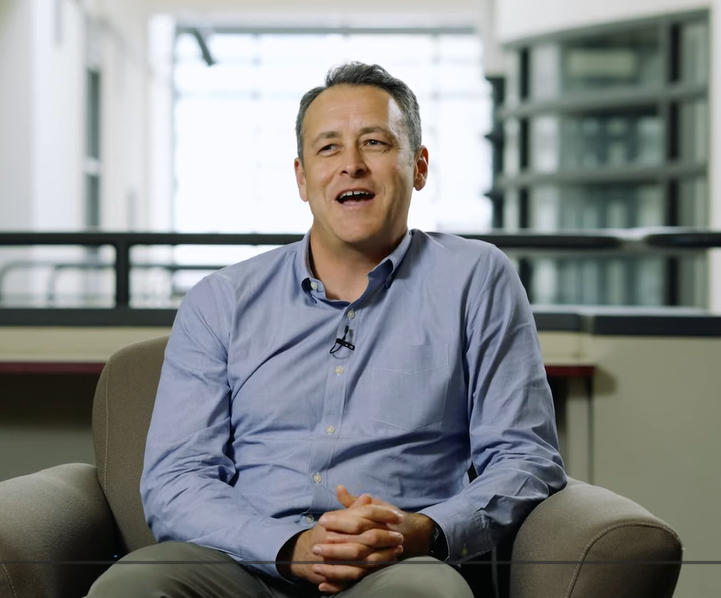
and Founder of Renova Environmental Company in Ocean Township, N.J., is
one of the 23 sellers interviewed for
the report.
The Rutgers Institute for the Study of Employee Ownership and Profit Sharing today released a new research report, “Business Owner Perspectives on Selling to Employees: Insights from In-Depth Interviews.” The report examines why and how some business owners chose a less common pathway to exit: the employee ownership pathway.
Rutgers researchers estimate that 1.2 million businesses are strong candidates for transition to employee ownership through an Employee Stock Ownership Plan (ESOP) or a worker cooperative (co-op). With these models, employees become owners, at no cost to them, and they build wealth alongside their wages, while businesses remain rooted in their communities.
This report goes directly to the source: the sellers themselves. Based on in-depth interviews with 23 company owners, it captures what owners considered, what triggered their search for an exit, and how their understanding of the available options evolved over time.
Across interviews, sellers consistently described employee ownership not as a niche or purely values-driven choice, but as a practical and financially competitive strategy. Many found they could achieve fair market value — sometimes comparable to private equity — while preserving jobs, maintaining company identity, and rewarding employees who helped build the business.
In their own words, these owners describe expanding their sense of what was possible. Some rejected outside buyers out of concern for layoffs or relocation; others were drawn to the opportunity to sustain their company’s culture and community ties. Together, their experiences offer a rare window into the human side of business succession and underscore a central message of the report: business owners have more choices than they often realize.
The Rutgers report was authored by Adria Scharf, Oyindamola Ijewere, and Matt Mazewski, with support from MetLife Foundation.
Press Contact
Steve Flamisch
Rutgers School of Management and Labor Relations
848.252.9011 (cell)
steve.flamisch@smlr.rutgers.edu
About the School
The Rutgers School of Management and Labor Relations (SMLR) is the world’s leading source of expertise on managing and representing workers, designing effective organizations, and building strong employment relationships.
About the Institute
SMLR’s Institute for the Study of Employee Ownership and Profit Sharing conducts empirical research, analyzes policy, and sponsors the leading global fellowship program and academic conferences in the field. The Institute also manages a research program focused on equity compensation (The Shares Laboratory) and a technical assistance center (The NJ/NY Center for Employee Ownership), including a new program with the New Jersey Economic Development Authority. The Institute offers a program to help college professors teach about these subjects (The Curriculum Library for Employee Ownership), a free Coursera course, and a free online program with short, engaging videos introducing employee ownership, sponsored by the W.K. Kellogg Foundation.
###