
What We Do
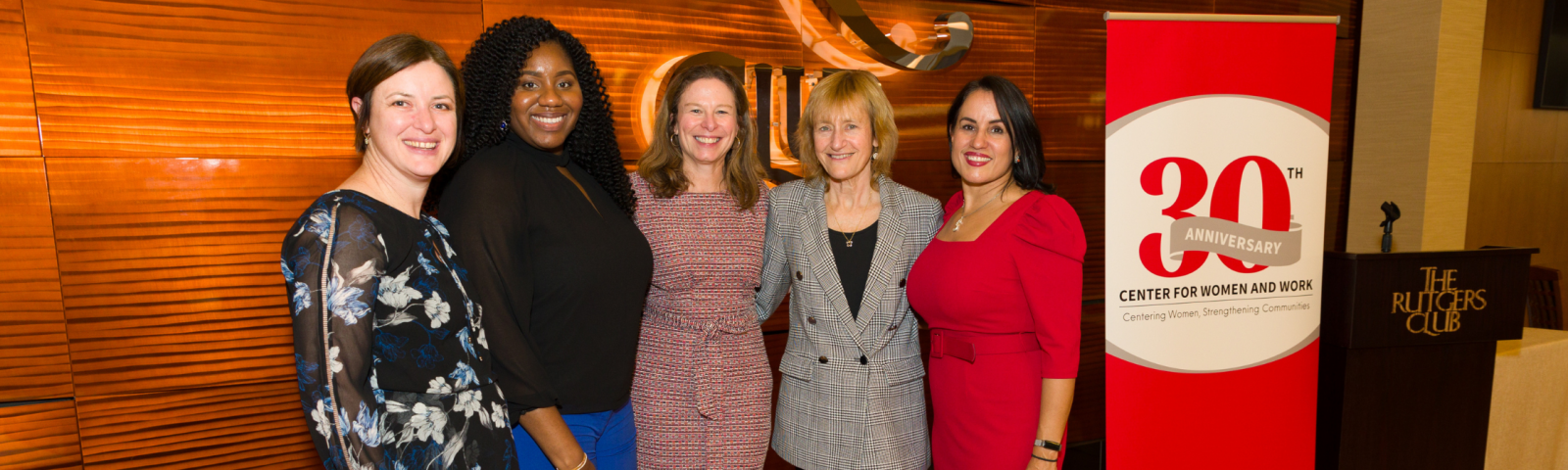
As part of its multi-faceted research and policy work, The School of Management and Labor Relations' Center for Women and Work (CWW):
-
Addresses women’s advancement in the workplace
-
Conducts cutting-edge research on successful public and workplace policies
-
Provides technical assistance and programs to educators, industry, and governments
-
Engages issues that directly affect the living standards of New Jersey’s and the nation’s working families
Our Focus Areas
Our areas of concentration include:
Recent Announcements
CWW's Report, Policy Matters, Finds That Public Policies Increase Workers' Access To Paid Parental Leave, Linked to Less Reliance on Public Assistance
The report concludes that paid leave policies can be viewed as proactive public investments in the health and well-being of children and families in the United States. It also presents an important analysis for policymakers concerned both with the economic security of families and the economic position of the United States.
Rutgers Report Calls for Policy Changes, Remove Obstacles For Those Who Never Finished College
Inexpensive policy changes can enable the state’s agencies and colleges to improve college completion rates in the state and simultaneously meet workforce goals, according to a new report, Close, but No Degree, released by the Center for Women and Work (CWW) at the School of Management and Labor Relations at Rutgers University on Thursday, March 22, 2012. ... read more.
NAWB Joins CWW's College Completion Effort
The National Association of Workforce Boards (NAWB) and the Rutgers University Center for Women and Work (CWW) are joining forces to explore ways to help workforce development clients complete college degrees.CWW has launched a multi-state initiative to leverage existing resources in order to identify adults close to finishing a degree and help them earn the remaining credits they need. ... read more
"Pay Matters: The Positive Economic Impacts of Paid Family Leave for Families, Businesses, and the Public" analyzes data from the National Longitudinal Survey of Youth, 1997 to 2009 and finds that women who take paid leave after a child's birth report stronger labor force attachment and positive changes in wages in the year following a child's birth, when compared to those who do not take any leave. The study also finds that women who take paid leave are less likely to receive public assistance and food stamps than those who do not take any leave. Click here to get a copy of the report.